Harrow MPs doing seen as ‘dividing’ British Indians & Hindu society!

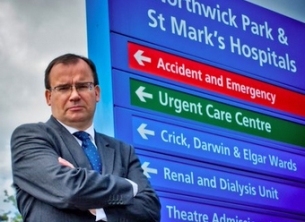
Gareth Thomas, MP for Harrow East, announces the formation of ‘all party parliamentary group of British Gujaratis’ (APPG) in the UK parliament’.
“The APPG will provide the Gujarati community with an opportunity to engage with politicians on matters such as health and wellbeing, education, social and cultural needs, immigration, bilateral trade with the state of Gujarat in India, and economic development in the UK” said the co-chair of the group Gareth Thomas (Lab). The other co-chair of the group is Harrow East MP Blackman (Con)!
The REACH (Race, Ethnicity And Culture Heritage) India, fostering a positive image of India, was quick to point out the divisive nature of the vote-grabbing initiative:
Gujarati divide
Moreover, contrary to what the APPG suggests, the Gujarati community in India or in the UK is not made up of Hindus only.
In trying to justify why the Gujaratis need specific representation, Thomas press release highlights that the Gujaratis are well established in the UK – they became doctors, accountants, solicitors, pharmacists, engineers etc’and that ‘there is hardly any sector, which has been untouched by the Gujarati community’.
Wonder if non-Gujaratis like Rishi Sunak (PM) or Suella Braverman (Home Secretory) would need specific representation because of their treatment for being who they are?
Interesting that political opportunism has no political divide line, and in hunting for the same ground, red merges to blue in exploiting Gujarati nationalism for political gains.
Such are the harmonious relationships between a Harrow Labour MP and a Tory MP that they have calculated their votes, and Harrow East and West territories are well-marked with apparent cosy arrangements whereby Tories don’t put a strong candidate in Harrow West, and the Labour do the same in Harrow East, as the outcome of the selection for Labour parliamentary candidate for Harrow East would confirm this Saturday!

Tale of the ‘tall’ buildings in Harrow!

Harrow council planning regime is working on a policy document regarding the height of buildings in suburban areas – the areas which are not as densely populated as an inner city, yet more densely populated than a rural area in the countryside.
The tall building Supplementary Planning Document (SPD), in the draft formation and consultation stage, provides guidance on what contextually tall buildings mean in relation to existing building heights in suburban areas.
The SDP would help in deciding the planning applications by considering the ‘context’ and contextuality of the tall buildings applied for.
Councillor Marilyn Ashton, Cabinet Member for Planning and Regeneration, said the SDP would help protect the character of Harrow suburbs.
“People come to live in Harrow because of its Metroland, 1930s leafy areas, and they want to see that character retained” she said.
[“1930s leafy areas” characteristics of Harrow have changed over the time as are the communities expectations, living pattern and needs. The planning and regeneration policies should meaningfully reflect this change.
Between the last two censuses (held in 2011 and 2021), the population of Harrow increased by 9.3%, from just under 239,100 in 2011 to around 261,200 in 2021.
In 2021, Harrow was home to around 37.0 people per football pitch-sized piece of land, compared with 33.8 in 2011.
Harrow saw England’s joint largest percentage-point fall in the proportion of households that owned their home (from 65.3% in 2011 to 58.8% in 2021).
In 2021, 45.2% of people in Harrow identified their ethnic group within the “Asian, Asian British or Asian Welsh” category (compared with 42.6% in 2011), while 36.5% identified their ethnic group within the “White” category (compared with 42.2% in the previous decade]
Harrow’s built heritage is principally found in clusters around its medieval town centres and historic landscapes. Early settlements such as Pinner, Stanmore and Harrow on the Hill are already protected by Conservation Areas with many Statutory Listed Buildings.
The SDP defines a ‘contextually tall’ building as being equal to or greater than twice that of the prevailing height of an area.
The politics of using the ‘context’ and ‘contextuality’ of the tall buildings is likely to create a two tier system of the tall buildings in the borough in the less (mostly Conservative) or more (mostly Labour) deprived areas.
DSE_9787dThe less posh areas like the Greenhill and Marlborough wards that already have tall buildings could have more tall buildings, while the posh areas like Pinner, Hatch End and Stanmore would not.
The SDP by insisting on the context of the tall buildings according to the specific areas, primarily protecting the posh suburban parts of the borough and therefore implicitly preserving their socio-cultural, class and political make-up, mostly Conservative, is concerning as whatever is built on a problematic base, is going to be problematic!
Moreover, the lack of a unified approach to the tall buildings across the borough is at odds with the spirit of the equal opportunities and Harrow’s Core Strategy.
As a good practice, the planning and regeneration policies should enhance and not damage the socio-political cohesion, harmony and continuity across the borough.

Free school meals for primary school children in Harrow, part of London Mayor scheme!

feature-fsmLondon’s mayor Sadiq Khan’s announced £130m scheme to give every primary school pupil in London free school meals for the next academic year, includes Harrow children.
Harrow has seen a growing number of children living in poverty, where over 18,000 children living in poverty. There are serious concerns about the profound and devastating consequences of food insecurity on the health, wellbeing and livelihoods of the residents.
According to the Action for Children report this year, 9597 (43.1%) of Harrow East and 7939 (33.2%) of Harrow West children were in poverty in 2020/21.
Other social deprivation input indicators include that around 58,230 people living in poverty in private households in Harrow as of March 2021 as estimated by the Office for National Statistics, and that 23.5% of residents were estimated to be earning below the Living Wage in 2021.
The total number of “violent crime” in Harrow is 11.5k, and this number has increased by 5.8% when compared year-over-year in the period of January 2022 – December 2022 according to the Plumplot.
London Mayor’s welcome initiative of the free school meals follows the similar decisions by the progressive London councils in Newham, Islington, Southwark, Westminster City and Tower Hamlets to offer their own universal primary school free school meals. Harrow?

Harrow Conservatives waste collection has faced backlash!

The Conservative administrations in Harrow have a somewhat troublesome history about the waste collection, seemingly because of its councillors responsible for this area of the council work.
The wheelie bins in Harrow were introduced by the marginal Conservative administration in 1989 on a trial basis with an assurance that these would not become permanent automatically. But then they did, causing serious backlash, as the sophisticated Harrow residents did not want the ‘bulking and ugly looking’ bin sitting in their front yard.
The Conservative administration in 2006 inherited the collection of the household waste using the Brown and Waste Bins system. But soon they decided to change in the frequency of collection of the Brown and Waste Bins. Not only this, but the then quick attention-seeking environmental portfolio holder recklessly moved the timetable for change from September 2006 to July 2006 to ‘further increase the council’s recycling performance’.
This waste bin collection arrangements became so unpopular that a Conservative seat in the Harrow Weald ward was badly lost in the August 2006 by-election that was held due to the death of the Tory councillor.
Later during their term of administration, Conservatives argued that they had been forced to introduce its three-bin system to improve the recycling rates needed to counter the rise of landfill taxes imposed by the Government.
Their claim that recycling rates in Harrow were 4 per cent before the council brought in wheelie bins, and are now 38 per cent, was misleading as they failed to point out  the ‘before’ figures were 20 years old –  Harrow introduced the bins in 1989.
In June 2009 the MailOnline also reported that Town hall chiefs were accused of pedalling ‘spurious propaganda’ after claiming that wheelie bins boosted recycling rates.
Eventually and because of the accumulated backlash of the waste collection arrangements and heavy-handed implementation of the CPZ (controlled parking zone) under the same Conservative portfolio holder for the environment, Tories lost the council in 2010.
In 2015, the council chose to roll out the Straight’s 7 litre kitchen caddy and kerbside caddy (food waste bin) to Harrow properties, apparently to improve the recycling rates.
bin2dThe collection of the food waste bins looked steady but is now less satisfactory under the new council administration (Tory), like as indicated by the resident comments on the Harrow council Facebook page that reported ‘since launching food waste recycling in flats last summer, we have now delivered kitchen caddies to 4,000 flats in Harrow’!
“Shame they don’t get collected from houses, mine is missed more often than not!! Fed up with reporting it and still not being collected!!” a comment.
“What has happened to the food waste collections? Until four weeks ago, our bin was missed once since it started. A fortnight ago and yesterday our road was missed? Yet each time it is marked as completed on the website. It means the website is pointless as someone just pretend the bins have been collected” another comment.
Like before, the quality of the environmental services is the most worrying under the present (Con) portfolio-holder as well.

Harrow council should not be wasting public money on Ulez legal action

“I can’t believe Harrow Council are signing off £400,000 on lawyers. £400,000 could deliver a library for Harrow’s children, or they could even offer people payments towards scrapping polluting vehicles. Instead, they’re spending the money on trying to keep the air we breathe toxic” says Krupesh Hirani, the London assembly member for Brent and Harrow. (image from his tweet).
b&h
The Harrow council claims to be a council that puts residents first, and a borough that is clean and safe.
Harrow alongside with few other Tory London boroughs issued a “pre action” warning letter to Transport for London last month, threatening legal action if Sadiq Khan’s decision to expand the ultra-low emission zone, that includes Harrow, on August 29 is implemented.
Harrow council’s leaders are set to issue High Court proceedings by February 24 against London mayor Sadiq Khan.
They are prepared to spend up to £400,000 fighting the expansion of the Ulez at the time of the tight council budget, proposing an increase to council tax by 4.99% again.
A controversial member of the Tory group on the Harrow council, Councillor Hall, sits at the London assembly and misses no opportunity to attack Sadiq Khan!!

Harrow council ‘new vision’ not working!

The Harrow council claims to be a council that puts residents first, and a borough that is clean and safe, through a proposed increase to council tax by 4.99% again.
In reality, it appears that this council statement is not owned by all council members with a responsibility, resulting in less than acceptable quality of the council services in some cases.
For example, residents still struggle for prompt and satisfactory response to their queries and complaints. The council letters where received miss the contact information such as an email address or a telephone number, making officer-resident interaction almost impossible!
The quality of the environmental services is particularly worrying:
Autumn leaf collection management, especially in many Labour held wards, is bad. In some cases, the footpath became quite slippery when the leaves got wet/ sticky after the rain, risking residents safety.
20221204_113017d2
Litter picking service in the parks and side streets has deteriorated to a point where even some politicians join the residents voluntary litter picking sessions!
We have seen evidence of the food bins (black cady) often being missed (these are usually collected in the dark hours of the morning).
bin2dWhen the missing out is reported, the automated ‘donotreply’ email informs that ‘our crews will collect your bin within 3 working days’ but they are not collected, though they are at the edge of the property, not overflowing and don’t contain anything that shouldn’t be in that bin.
The street cleansing/ repairing programme, regularly carried out previously, has declined.
Although Covid is not a key factor now, the council has seemingly failed to fully recover or is using it as an excuse not to recover from the decline in the quality of its work in many cases.

Harrow retains Kodak icon!

IconicThe Kodak Works, a photographic manufacturing plant and research and development centre, was built in what was then farmland in the hamlet of Wealdstone, Harrow.
Kodak purchased 7 acres of land and the plant opened in 1891, Kodak’s first manufacturing facility outside the United States.
Initially, the factory developed and printed photographs for clients. In the next 20 years, the factory expanded. Eventually, film rolls and photographic paper were also being produced at the plant.
At its peak during the 1950s, about 6,000 workers were employed at the site. By then, the facility covered an area of 55 acres.
The commercial feasibility of the Harrow site declined and was being wound down in the 2000s. Some parts of the site were demolished, others were sold or leased.
In 2005, film production ended at all Kodak plants in the UK, and in Harrow 600 jobs were lost. Nevertheless, 1,400 employees continued to work at Harrow.
Following Kodak’s bankruptcy in the U.S. in 2012, the future of the site was unclear. The British spin-off Kodak Alaris took control of the site in 2013 and its association with the original American Kodak ended.
Eventually, the site was purchased by developers who planned to build 2,000 new homes along with new facilities. The development is called Eastman Village, paying homage to the founder of Kodak, George Eastman.
The 213 feet (65 m) tall chimney of the factory, which has been a local landmark, is being retained.
Below is a section of the new development:
78N_2010d

Katie needs attention!

KT1

Katie, Harrow Town Centre icon, could do with restoration.
The landmark bronze sculpture called Skipping Katie is modelled on and named after the daughter of creator James Butler, 80, who won a public art commission held to mark the opening of newly-pedestrianised St Ann’s Road.
The statue was ceremonially unveiled in May 1987 by the then-Mayor of Harrow, Councillor Christine Bednell, who remained a Conservative ward councillor for Stanmore Park till 2018, and Jacques Vernier, the visiting mayor of Harrow ‘s twin town of Douai in France.
While the skipping Katie was removed for several months some years back when Station Road was improved by Harrow Council, a good restoration opportunity was missed.
Harrow prides itself in its environmental heritage, but in some cases seems to neglect maintenance.KT2

Harrow council workforce missing equality balance  

Harrow council needs to redress staffing imbalances, as the council’s recent Annual Workforce Equality Report identified over and under-representation at several levels.
The majority of the workforce is aged between 35-64 (76%), under-representation of 16-24 year olds (1.6%).
The workforce has more female (60%) than men (39%) but women in senior pay bands remains low, with men making up 64% of those within pay band 6.
An under-representation of Black, Asian and Multi-ethnic staff across the council (46%), though higher than other London boroughs.
Over 55% of the male workforce is white while 50% of the female workforce are from Black, Asian and Multi-ethnic communities, mostly in the lower pay bands, with the largest proportion coming from an Asian background (35%), compared to 42% of the female workforce that is white.
Declared disability status remains low (4.3%). The majority of staff declaring a disability are women (66%) compared to men.
There are also imbalances at the recruitment stages: more 25-36 year olds applied (25%) and were successful in 2020-21 (26%), compared with 45-54 year olds who had a higher success rate from application (14%) to appointment (24%), and 12% of applicants were aged 16-24 (12%) with a success rate of just 6%.
There was a higher rate of applicants from women (60%) compared to men (40%), with more female candidates being shortlisted for roles (60%) and 39% of male candidates. 65% of female candidates were successfully appointed to roles, compared to 35% of male candidates.
Around 69% of applicants were from a BAME background, compared to 28% who were white, however the success rate for BAME applicants is lower than whites, with 22% of BAME candidates being shortlisted for roles, compared to 25% of white candidates. Of this, 28% of successful appointments were from a BAME background, compared to 40% of white candidates.
The reported workforce is made up of 2,071 full time and part-time staff, excluding school staff.

Harrow council ex chief in national headlines!

ML2Michael Lockwood, 63, director general of the Independent Office for Police Conduct (IOPC), has stepped down with immediate effect.
In a statement posted on the IOPC website on Friday night, Mr Lockwood said: ‘It is with great sadness that I have decided to resign as director general of the IOPC for personal and domestic reasons, and this will be effective from today.’
But the Mail online reported on 3rd December that Michael Lockwood quits amid ‘criminal investigation’ into an allegation some 40 years ago.
The IOPC was set up in January 2018 following the closure of its scandal-hit predecessor, the Independent Police Complaints Commission.
Since he became the IOPC first director general, Mr Lockwood has presided over high-profile police conduct investigations, including ‘systemic racism’ within police forces, the 17 officers who handled the investigation into murders of four young men by Stephen Port, and Boris Johnson’s relationship with US businesswoman Jennifer Arcuri while he was mayor of London.
After Ms Everard’s murder last year, he said officers who fell below expected standards of behaviour were not ‘one-off events’ and couldn’t be dismissed as a ‘bad apple’, adding: ‘There must be self-awareness of the problem and firm action to tackle it by leaders.’
Mr Lockwood was the Harrow council chief executive for about 12 years till 2018 with a short break in between.
In 2014, the Labour administration decided to restore the role of chief executive and reappointed the popular council chief executive Michael Lockwood, who was forced out by the Cllr Hall (Tory) short-lived administration as they vindictively abolished the chief executive post.
Such was the nature of personalisation at the Harrow council that the members of the Tory group did not attend Mr Lockwood’s farewell event in number to demonstrate that the leaving chief executive is not popular and would not be missed.
Interestingly, Cllr Hall now chairs the London assembly’s Police and Crime Committee that examines the work of the Mayor’s Office for Policing and Crime (MOPAC), overseeing the Metropolitan Police work.