“Our workforce is diverse, talented and adaptable and our local businesses are wonderful. With this support and their own skills I have every faith in them to be able to rebuild and flourish” said Cllr Keith Ferry, business, property and leisure portfolio holder as Harrow Council launched its Draft Economic Strategy which aims to respond to the economic consequences of the Covid-19 pandemic and support the recovery.
Cllr Graham Henson, Harrow Council leader added: “We have also worked hard to secure millions of pounds in external funds to deliver a range of employment, business support and infrastructure programmes.”
All this sounds well but how the strategies outlined in the plans help the small street businesses predominantly run by the cultural diversity like Afghani, Pakistani and Turkish communities?
(for example, Station Road Harrow and High Street Wealdstone are kept alive by these businesses, though not acknowledged)
The following core of the Draft Economic Strategy is of little relevance to these street businesses, considering the nature of their business.
The strategy says that in the immediate term the Council has secured over £16m in external funds to deliver a range of employment, business support and infrastructure programmes, and these include:
– An expansion of the Council’s job brokerage scheme and the launch of a vacancy bulletin supporting those who became unemployed to work with sectors, such as social care.
– Transferral of apprenticeship levy funding to SMEs to create new apprenticeships in care, health, construction, and digital sectors.
– Expansion of English for Speakers of Other Languages (ESOL) and employability provision to deliver outreach services.
– Promotion of our Jobs, Employment and Training Programme as well as the Work and Health Programme
It looks that the council still has a long way to go in developing meaningful and inclusive ethos, policies and community support across the council, which are needed as the ‘community cohesion’ cannot be achieved in vacuum.
Cllr Graham Henson, Harrow Council leader added: “We have also worked hard to secure millions of pounds in external funds to deliver a range of employment, business support and infrastructure programmes.”
All this sounds well but how the strategies outlined in the plans help the small street businesses predominantly run by the cultural diversity like Afghani, Pakistani and Turkish communities?
(for example, Station Road Harrow and High Street Wealdstone are kept alive by these businesses, though not acknowledged)
The following core of the Draft Economic Strategy is of little relevance to these street businesses, considering the nature of their business.
The strategy says that in the immediate term the Council has secured over £16m in external funds to deliver a range of employment, business support and infrastructure programmes, and these include:
– An expansion of the Council’s job brokerage scheme and the launch of a vacancy bulletin supporting those who became unemployed to work with sectors, such as social care.
– Transferral of apprenticeship levy funding to SMEs to create new apprenticeships in care, health, construction, and digital sectors.
– Expansion of English for Speakers of Other Languages (ESOL) and employability provision to deliver outreach services.
– Promotion of our Jobs, Employment and Training Programme as well as the Work and Health Programme
It looks that the council still has a long way to go in developing meaningful and inclusive ethos, policies and community support across the council, which are needed as the ‘community cohesion’ cannot be achieved in vacuum.
 Wealdstone ward, 75% BAME population, is one of the most deprived wards in Harrow – with overcrowding, unemployment, crime and the fear of crime being major concerns – many say it is now a ‘no-go area’ in the evenings – most didn’t even know about the Harrow council’s ‘re-generation’ plans.
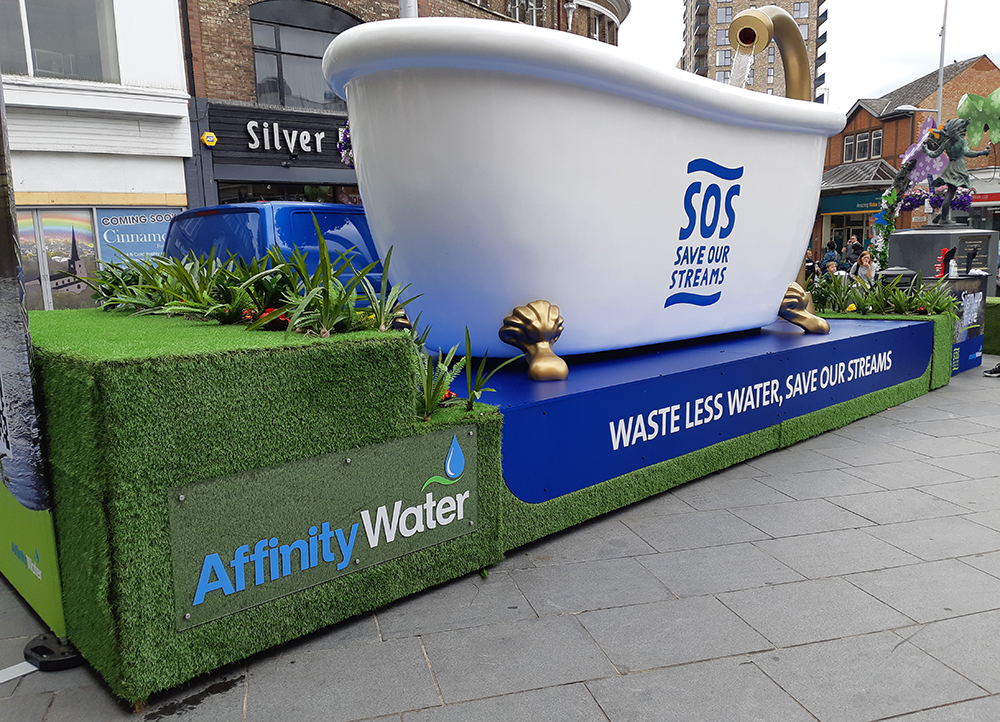 Affinity Water campaign Save Our Streams, staged in Harrow now, is the UK’s biggest ever water saving initiative, focused on saving incredibly rare chalk streams, and the habitats they provide for local wildlife.
 Very concerning to
  Harrow East parliamentary candidate (Lab) last election and a dedicated socialist, Harrow Councillor Pamela Fitzpatrick is one of the six socialist women elected to the Labour’s new National Women’s Committee.
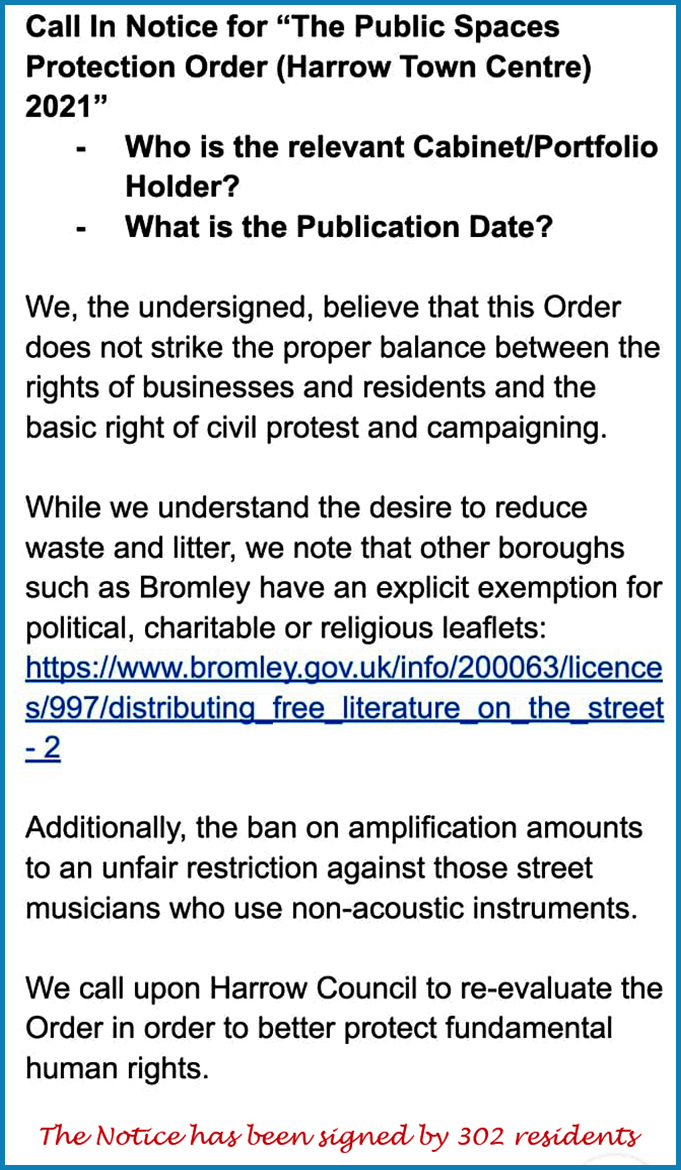 The Call-in notice, challenging the ill-thought and overly forceful Harrow Town Centre Public Spaces Protection Order (PSPO) decision, signed by 302 residents, has been sent to the Harrow council today (3 June).
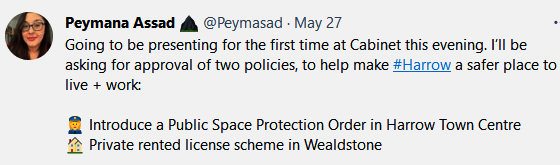 Failure to comply with a PSPO is an offence and can lead to a summary conviction and fine not exceeding level 3 on the standard scale. All enforcement officers as well as police are authorised to take action under it. The PSPO will be in place for a maximum 3 years as per the law, but will be reviewed to ensure it is effective in its approach in tackling issues that affect businesses and the public.
 Harrow Monitoring Group
You must be logged in to post a comment.