Show ID to use the dump yard & pay for some waste disposal

Further to our report ‘New waste disposal plans’ in July,  the Harrow council has decided that all Harrow residents be required to produce proof of identification that they lived in the borough in order to dispose of household waste free of charge.DY
The ID to be presented on entry could be a Council Tax Bill, a Bank Statement, an Electric, Gas or Water Bill or a Driving licence.
‘There would be enough staff at the site to minimise any inconvenience or delays that the identification procedures could cause’ said a council staff.
Other changes from 13 November include a charge of £20 to non-residents using the Harrow Re-use and Recycling Centre (HRRC) at the Forward Drive per visit.
Harrow residents will be prevented from disposing of non-household waste free of charge, including building waste resulting from construction or demolition works and home renovation works.
The Automatic Number Plate Recognition systems (ANPR) will be used at the site to help control and restrict unauthorised usage.
Regarding no free of charge disposal of the waste from the home renovation works that has serious implications for the residents who carry out DIY activities, we were assured that the HRRC staff would be able to recognise which waste is coming from a builder or resident and helpfully deal with individual situations.
The council says that these measures are to reduce the number of vehicles visiting the site and traffic congestion as well as significantly reducing the amount of residual tonnage disposed of at the site and further reduce the amount of trade and business waste that is deposited at the site.


Blackman slapped over Hive!

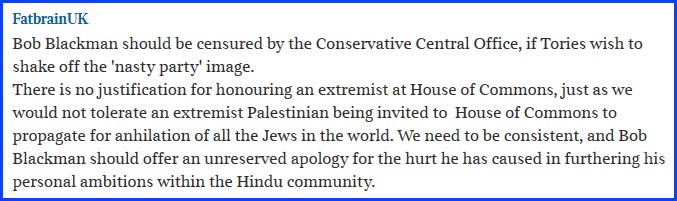
bb4Harrow East Tony MP Bob Blackman (photo) often uses Hive situations to stir up community emotions – particularly in the significantly Asian populated Edgware and Queensbury wards – for political gains.
This time, he raised superficial concerns about Hive and accused Harrow council for inaction at the Commons on 7 September, claiming breaches of the planning permission, negative impact of professional football played at the stadium and the sale of the site to ‘private companies’ – ‘Harrow council sold the site to Football First Ltd for about £2 million in March 2017’, Mr Blackman informed.
Hive at Camrose Ave, Edgware Harrow is a community facility offering both artificial and natural grass football pitches for hire at competitive rates. Barnet FC is the main user of the stadium and plays its professional games since it left Underhill in Barnet in 2013.
Harrow council in its brief in August 2013 pointed out, “The site benefits from planning permission which was implemented in 2008 (Tory administration). The use of the site for sports purposes is consistent with the Local Plan and the planning permission. The use of sports pitches (including the first team pitch in the stadium) is accordingly lawful.”
In responding to Mr Blackman’s concerns, Tory MP Marcus Jones Parliamentary Under-Secretary of State said, “As I understand it, the current home of Barnet Football Club, the Hive, has abided by all the conditions that the English Football League required of them,”
“The English Football League ratified Barnet’s move to the new home at the Hive, and I understand that the team continues to abide by the conditions required by the Football League” he added.
On planning matters, Mr Jones rebuked Mr Blackman, reminding him that any local opposition or support “will not necessarily result in the local planning authority refusing or granting planning permission; rather the decision maker will determine what weight to give to any material considerations.”
Regarding the disposal of public assets, Mr Jones explained that the Local Government Act 1972 gives councils the power to dispose of land “in any manner they wish, including by selling their freehold interest, granting a lease or assigning any unexpired term on a lease and granting easements.”
Mr Blackman sought confirmation that the Secretary of State has not given approval for the sale of this asset (Hive) outside the general rules that apply to the sale of public assets.
“I asked my officials whether any application was made to the Secretary of State in this case and I was informed this afternoon that no such application was made” the Under-Secretary of State replied.


Harrow council chief helping out Grenfell

It should be a matter of pride for Harrow that the Harrow council chief executive Michael Lockwood has been trusted and actively involved in the Grenfell remediation work.
ML2Working as the executive site manager, part of the government taskforce assembled in the wake of the Grenfell fire disaster, Mr Lockwood has met the state secretaries, the prime minister who initially showed poor response to the tragedy, and is working closely with the local community in the building-related matters.
A devastating fire ripped through the 24-storey building in west London on June 14 without a single fire alarm or sprinkler being set off, killing at least 80 people.  The rich Tory-led Kensington and Chelsea council’s response to the disaster was poor. Eventually the chief executive as well as the leader of the Kensington and Chelsea council resigned.
Locally, there is very bitter feeling that the Grenfell Tower deaths were a failure of listening and social care by the local council, particularly as the residents of the high-rise multicultural space tended to be immigrants – poor and frequently non-white – whose concerns regarding the health & safety of the tower were ignored.  Therefore, the local community seriously lacks confidence in the council.
It is against this backdrop that Mr Lockwood is working with the local community.
Describing the state of community mistrust, Mr Lockwood told the Narrow Monitoring Group, “Initially I found a very anti Government/anti Council (Kensington and Chelsea) feel. Emotions understandably were very raw – residents felt ignored and forgotten over many years.”
Mr Lockwood’s work includes making the building safe and less distressing and to retrieve personal possessions, which he is doing in consultation with the residents.
“I have tried to listen and develop a good relationship with the survivor’s of the Tower. It has been very emotionally draining but also very rewarding in trying to help them rebuild their lives” Mr Lockwood explained.
He says the recovery process is being carried out “sensitively, respectfully and with dignity”, for example, retrieving personal possessions “would happen in consultation with those residents, and at the speed that they want” Mr Lockwood informed.
On the question of covering the building he said, “We want it covered because it’s so distressing. It’s what the community wants.”
He has recently met primary school pupils in the area and asked them if they would like to come up with paintings of what they would like to see on the building.  The works would be projected on to the scaffolding screen covering the building.
Mr Lockwood’s Grenfell experience of how easy it is for the authorities to become less connected with all those they should be caring and supporting, would help in delivering inclusive council services to benefit all residents in Harrow, especially as the Harrow opposition Tory group, who could win the council in 2018, is known to be under right-wing leadership, insensitive to social justice!

New Tory group leader

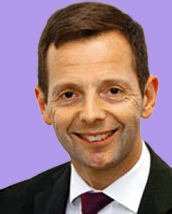
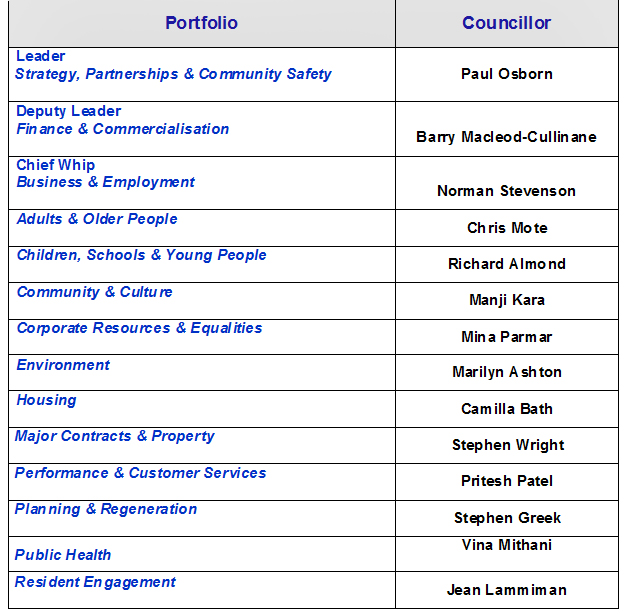
Third time lucky, Cllr Paul Osborn (photo) has been elected as the new leader of the Tory group on the Harrow council. Hopefully the opposition would have a change of direction and attitudes, better than a hair-dresser shop gossip culture!AAEAAQAAAAAAAAWJAAAAJGJiNDEyNmRjLTQ3MzQtNGUxYy05MDA5LWM3NDJhM2JhNWNkNQ

Background   
Following our call ‘Time for Cllr Hall to step down’, Cllr Hall stepped down as the leader of the opposition Tory group at the Harrow council.
The Tory group members had rightly wished to use their voice and aimed for the change of direction to unite the group and demonstrate strength to voters (Tory group lost the councils in 2010 and 2014 as well as two by-elections in between, under Cllr Hall’s leadership) …  read more by clicking here
Out of the four candidates for the Tory group leadership election, we mentioned two:
Cllr Marilyn Ashton, past chairman and an officer of the Harrow East Conservatives Association, is a long standing Harrow councillor representing Stanmore ward. She knows how council works and has particular interest in planning matters. Cllr Ashton is calm, analytical and well respected widely.
Paul Osborn has been a Pinner councillor for many years. He, because of his ability in performance management, has been working with most senior officers at the council. He has been generally known as the non-confrontational face of the Tory group.
We hope Cllr Osborn would appreciate that in a local democracy both the administration and opposition have a crucial role in running the council for the benefit of the residents.
We hope he would work with all and demonstrate a non-vindictive approach.

About time!

Following our call ‘Time for Cllr Hall to step down’, we have heard that Cllr Hall is stepping down as the leader of the opposition Tory group at the Harrow council.
The Tory group members have rightly wished to use their voice and aimed for the change of direction to unite the group and demonstrate strength to voters (Tory group lost the councils in 2010 and 2014 as well as two by-elections in between, under Cllr Hall’s leadership) …  read more by clicking here
Out of the four candidates for the Tory group leadership election we have heard, we mention two:
MA4Cllr Marilyn Ashton, past chairman and an officer of the Harrow East Conservatives Association, is a long standing Harrow councillor representing Stanmore ward. She knows how council works and has particular interest in planning matters. Cllr Ashton is calm, analytical and well respected widely.
Paul Osborn has been a Pinner councillor for many years. He, because of AAEAAQAAAAAAAAWJAAAAJGJiNDEyNmRjLTQ3MzQtNGUxYy05MDA5LWM3NDJhM2JhNWNkNQhis ability in performance management, has been working with most senior officers at the council. He has been generally known as the non-confrontational face of the Tory group.
We hope whoever wins the leadership election would appreciate that in a local democracy both the administration and opposition have a crucial role in running the council for the benefit of the residents.
We also hope the new leader would work with all and demonstrate a non-vindictive approach.

Use of Harrow migration money questioned

Following is the summary of the feedback on our article Harrow obtained £400k on confused premises, and our further research.
Money is money, however it is obtained.
There have not been community consultations with the ‘migrant’ community or the ‘established resident population’ to ascertain needs and determine appropriate projects using £400K Migration Fund that are to benefit the established resident population.
The funding criteria say: “all projects must demonstrate how they will benefit the established resident community in the first instance”.
The Harrow case for £398,160 fund, argued to benefit the ‘established community’ by teaching English language to unclearly and uncertainly defined small group of people, including children, is somewhat ‘misleading’.
It is not the English language deficiency in a small number of people, mostly children, (mix of “migrants”, “asylum seekers”, “Unaccompanied Asylum Seeking Children”) that has implications for the quality of life of the ‘established resident population’, but the negative impact on the quality of life is mainly due to the increased anti-social behaviour that includes random flytipping, stabbings and trafficking which the council has failed to address effectively.
Given thatmigrationis people movement mainly to improve their lives by finding work, how could children, some “minor”,  meet the Migration Fund criteria?
In any case, needs of bilingual learners in English schools are already funded – the minimum funding levels for English as an additional language 2015-16 was: Primary £466 Secondary £1,130.
Also, where a school’s pupil numbers increase, for example due to a new migrant community, the school receives the associated funding for those pupils.
The Department for Education also allocates capital funding to local authorities to provide additional capacity, based on local authorities’ own data on existing school capacity and pupil forecasts. These forecasts take account of patterns of national and international migration.
Our disappointment is that the negative language describing ‘recent arrivals’ in 1980s and controversial  premise of acquiring  Section 11* money for them in Harrow then  (mostly for teaching English language) which did not really benefit them, have been duplicated for obtaining similar funds in 2017, giving a sense of professional incorrectness.
We feel sorry for the decision-making members of the council who were tempted by £400k but not really given an honest brief.

*Section 11 funding
A problematic view of immigrants was legalised by the Local Government Act of 1966, stating a negative definition “immigration is the great social problem of this Century and of the next” – p1308 of Hansard: 1966/67: Volume 29.
In response, Section 11 of the Local Government Act of 1966 provided funding to the authorities to ‘help meet the special needs of a significant number of people of commonwealth origin with language or customs which differ from the rest of the community’. This funding was vastly obtained to integrate and teach English language to bilingual learners but was mostly used for all sorts of things and was eventually discredited.  Read more

Harrow obtained £400k on confused premise!

Following our article regarding the £400k Controlling Migration Fund (CMF) to Harrow, we have obtained a copy of the application for the funding.
Like the Section 11 funding* and its use/ misuse many years ago, Harrow application for £398,160 public money revolves around teaching English language to unclearly and uncertainly defined group of people.
Harrow funding is important but what is also important is the premise for obtaining the additional public money, considering the biting cuts in public services around the country and more deserving cases somewhere else. Further concern is the expression of negativity about certain groups of people in a zeal to meet the funding criteria.
Many migrants have no understanding of our cultural norms. This has led to numerous problems particularly in relation to the nature of their interaction and treatment of girls and young women” asserts the application.
The CMF was launched last November and allows local authorities in England to bid for funding for “responding to the problems caused by high migration” where the projects “will deliver benefits to the established resident population”.
Somewhat confused Harrow application sets the scene: “Harrow has an extremely diverse population. The population is 25% Hindu, 12% Muslim and 37% Christian (are these well established groups  ‘migrants’?). This level of diversity has not helped migrants assimilate (there is obvious difference between ‘integration’ and  colonial expectation of  ‘assimilation’!!). Approximately half the client group of the Leaving Care and UASC (Unaccompanied Asylum Seeking Children) Team are, or were unaccompanied minors. In the last year the Team has received twenty-two new young asylum seekers. This does not include those who are Dublin Regulation referrals”.
Then the application points out, “The migrants referred to our service arrive with limited or no written or spoken English. In the past twelve months, including the Dublin Regulations and Dubb’s amendment children we have had 35 new children, none of whom spoke English”.
But the standard definition ofmigrantsis those who choose to move not because of a direct threat of persecution or death, but mainly to improve their lives by finding work?
Are these migrant ‘children’, some ‘minor’,  here to find work  ?
The Dublin Regulations are to reduce the number of “orbiting” asylum seekers, who are shuttled from member state to member state (EU).
An asylum seeker is someone who claims to be a refugee but whose claim hasn’t been evaluated.
Refugees are those fleeing armed conflicts or persecution.
So who are these children – migrants, asylum seekers or refugees?
The application has seeming made exaggerated case of the impact of the English language deficiency in a small number of ‘children’ on the lives of the rest of the Harrow population.
Moreover, a well run council should have credible professional risk assessment and could/should absorb pressures due to the demographic changes rather than draining out scarce national resources.
Perhaps the decision-making members of the council were tempted by £400k but not given an honest and clear picture.

*Section 11 funding
A problematic view of immigrants was legalised by the Local Government Act of 1966, stating a negative definition “immigration is the great social problem of this Century and of the next” – p1308 of Hansard: 1966/67: Volume 29.
In response, Section 11 of the Local Government Act of 1966 provided funding to the authorities to ‘help meet the special needs of a significant number of people of commonwealth origin with language or customs which differ from the rest of the community’. This funding was vastly obtained to integrate and teach English language to bilingual learners but was mostly used for all sort of things and was eventually discredited.

Tory ‘hypocrisy’ on sexual matters!

While the council is in summer recess, Edgware councillor Chika Amadi  (Lab) is facing calls to resign over her social media comments regarding lesbian, gay, bisexual, and transgender (LGBT).CA
Having seen some intriguing comments by Tories apparently supporting what Pink News has reported and is demanding, Tories seem to be mindful of their success at  Kenton East and would now welcome Edgware by-election.
In July, thousands of people joined the annual LGBT+ parade through the capital and Cllr Amadi reportedly said that Pride parade marchers are ‘traumatising’ little girls with nudity.
She allegedly wrote: “Nothing but paedophilia being labelled liberalism adults polluting children with their senselessness.”
In responding to the criticism about her comments, Cllr Amadi reportedly said, “Anyone who wants to bring me down from my political career because of my faith and stand on the word of God will encounter the burning anger of the God that I serve”.
Hopefully Labour would deal with Cllr Amadi accordingly but Tories have never taken any action against their Harrow East MP Bob Blackman for his controversial position on LGBT.
For example, in disapproving the same-sex relationships, Mr Blackman was widely reported saying, “I was one of those that strongly believed that Section 28 was the right rules to have in school so that we should not promote in any way shape or form promote same-sex relationships, I still abide by that and feel that is the right way forward, and if teachers are forced to say same-sex relationships are equivalent to heterosexual relationships I’d be very opposed to that.”
Section 28, introduced by Tory government and repealed by Labour, made it unlawful for local authorities to ‘promote homosexuality’.
Mr Blackman also voted against allowing marriage between two people of same sex.

Specific funding for Harrow – history repeats!

Harrow council has announced that nearly £400k has been awarded to Harrow from a government scheme designed to help migrants integrate in their new communities in the UK.
The Controlling Migration Fund (CMF) was launched last November and allows local authorities in England to bid for funding totalling £100million over four years from 2016/17 to 2019/20.
Communities Secretary Sajid Javid said: “Migration brings great benefits to this country but, in some places, significant population changes in a short space of time have put pressures on public services. This new funding will help councils rise to the challenge.”
The target group is seemingly Eastern European migrants (refugees are not classed as ‘migrants’)!
Harrow council is hopeful that this funding “will help families integrate and increase their ability to contribute economically (how?)”, for example, by employing a teacher to provide English lessons (one teacher for the whole migrant population in Harrow?).
The use of this funding has to be more imaginative.
Where councils recognise that the established resident community within their area has been in some way affected by recent migration, either legitimate or illegal, they are invited to put forward a bid to the fund. The proposal should set out the issue, with evidence, and the action that the council wishes to take. Examples of eligible activities include building community cohesion and encouraging integration, tackling the increase in rough sleeping by non-UK nationals or tackling rogue landlords.
Commenting on the marginal funding, Harrow Council for Justice chairman Jaiya Shah who had first-hand experience of the use and misuse of the Section 11 funding in Harrow in 1980s, said “seen this before – the premise and use of the funding reminds what happened 35 years back”.
Then Harrow received substantial amount of Section 11 money which was more or less used to balance the books or to provide mainstream services like education and housing without consulting the beneficiaries of the Section 11 funding or ascertaining  their specific needs.
To avoid past bitterness, perhaps the Harrow council could learn from its 1980s archives regarding section 11 community consultations.
Also, perhaps the council would like to use some of this specific money to address much increased ad hoc flytipping in the borough.

Section 11 funding
A problematic view of immigrants was legalised by the Local Government Act of 1966, stating a negative definition “immigration is the great social problem of this Century and of the next” – p1308 of Hansard: 1966/67: Volume 29.
In response, Section 11 of the Local Government Act of 1966 provided funding to the authorities to ‘help meet the special needs of a significant number of people of commonwealth origin with language or customs which differ from the rest of the community’. This included funding to support the education of bilingual learners.

New waste disposal plans

Recycling-glassHarrow council is likely to introduce new arrangements for using the Harrow dump yard at the Forward Drive (formally known as Harrow Re-use and Recycling Centre).
The HRRC review report before the cabinet meeting on 13 July, recommends measures to seemingly raise money and reduce the number of vehicles visiting the site – 35,000 cars a month on the upper level and several hundred vans on the lower level, last year.
The report recommendations include that all Harrow residents produce proof of identification to demonstrate that they live in the borough in order to dispose of household waste free of charge.
The ID to be presented on entry could be a Council Tax Bill, a Bank Statement, an Electric, Gas or Water Bill or a Driving licence – no estimation of the inconvenience and delays that the identification procedures would cause.
The council is required to provide a place for residents in its area to deposit their household waste free of charge, although not obliged to accept other types of waste free of charge.
Along with the identification, Automatic Number Plate Recognition systems (ANPR) at the site will be used to help control and restrict unauthorised usage.
The other biting recommendation is that Harrow residents be prevented from disposing of non-household waste free of charge, including building waste resulting from construction or demolition works and home renovation works. This has serious implications for the residents who carry out DIY activities.
Where the disposal of waste resulting from household renovation projects could be permitted free of charge, it is restricted to a maximum of two bags of rubble or spoil per day – if more than this, the whole load be deemed non-household waste and becomes chargeable.
Repeat visits by residents disposing of small amounts of waste building materials will also result in a decision that the waste is non-household and therefore charges will be levied.
One wonders about the cost effectiveness of implementing these waste disposal measures, and the level of public inconvenience the new arrangements would cause.