Harrow focus on mental health

WorkshopGood to see the Harrow’s first community mental health workshop on 31 January this year. The workshop was widely publicised.
The event was run in partnership with Thrive LDN, a citywide movement for mental health, supported by the Mayor of London. Community members including health professionals and faith leaders heard about the six aspirations of Thrive and how to achieve them in Harrow.
Sharing his experience of the workshop, Harrow Council interim chief executive Tom Whiting said, “We heard some great ideas for improving Harrow’s mental health, including something as simple as just smiling at each other more.”
Along with the local initiatives like this workshop, Central North West London NHS Foundation Trust which provides a wide range of mental health to borough of Harrow has also improved from being in the failing category in 2015 (for mental health provisions) to being overall good last year (the rating for acute ward for adults of working age and the Paediatric Intensive Care Unit, although changed from inadequate to requires improvement, is still not good).
“In February 2015, we rated one of the sixteen core service as inadequate and a further two of the sixteen core service as requires improvement. At this inspection we found the trust had worked to make improvements and the trust had taken action to meet the requirement notices issued following the February 2015 inspection” said the Care Quality Commission.
The CNWL had previously identified several points ‘Must Dos’ for Harrow mental health teams, including:
• promote the privacy (phone calls) and dignity of patients
• reduce the number of times that patients are moved to other wards to sleep for non-clinical reasons, staff must ensure that a thorough handover takes place to promote continuity of care and patients must only be moved at reasonable times so that they are not adversely affected
• make sufficient staff available to work as care co-ordinators

 

Camrose Avenue speed cameras not possible

speed-camera-sign-1183397_1280Harrow council says that the installation of speed cameras is the responsibility of Department for Transport (DfT) and not the council but in any case the criteria for installing the cameras on Camrose Avenue are not met.
A petition containing 168 signatures presented to the council meeting on 30th November 2017 expressed concerns about speeding on the Camrose Avenue in the Edgware Ward and asked  for two speed cameras, one each way on Camrose Avenue between the church in Camrose Avenue and the traffic lights.
A report before the Traffic and Road Safety Advisory Panel on 8 February 2018 informs that for the speed cameras to be considered they are required to meet strict DfT guidelines and are only located at sites where there have been three or more fatal or serious speed related personal injury collisions within the last three years. The accident record for this location would therefore not justify a case for a speed camera.
Other types of road safety improvements are generally carried out by the Council at locations where the number of accidents involving personal injury is higher than average and where an analysis of the accident patterns indicates that changes to the road layout could improve the situation.
The council has examined the most up to date injury accident data  for the whole length of Camrose Avenue and the report concludes that “compared to other areas, Camrose Avenue has a good road safety record”.
Residents are advised to contact the local police safer neighbourhood team if concerned about speeding traffic as the police is responsible for enforcing speed limits on the public highway and may be able to advise of any initiates they may have planned in the area.


Harrow Council takes its libraries back in-house

Lib2From Thursday 1st February 2018, Harrow Council is assuming responsibility for the management of Harrow’s library service.
The service had previously been run for the Council by Carillion Integrated Solutions (CIS). CIS is a subsidiary of Carillion, a corporation that is now in liquidation.
It will be business as usual for staff and residents, with no change to libraries’ operating practices or opening hours.
The refurbishment of Kenton Library also continues, unaffected, with completion still set for Thursday 1st March.
Over the coming months, Harrow Council will be considering the best way to provide continuity and stability in Harrow’s library services in the future. That could mean retaining their management in-house or securing another provider to continue the service.
In 2013, the council administration considered who could run the libraries best and opted to out-source the library service. Like then, there is strong opinion for in-house management of Harrow libraries.
“We’re making sure our libraries aren’t affected by the collapse of Carillion. Right now, we’re taking the libraries in-house because that is the best way for us to take care of staff and keep services running normally” said the council portfolio holder for community Cllr Sue Anderson.
“I’m proud of the commitment our staff have shown in difficult circumstances and I’m pleased to show our council’s unwavering commitment to them and the library service” She added.


Opposition deputy continues Hall negativity

While the last cabinet meeting on 18th January welcomed Tom Whiting as Interim Chief Executive, deputy leader of the opposition Tory group Cllr Barry Macleod-Cullinane mischievously asked about the on-costs of having a full-time Chief Executive role?
After the Labour regained the council in 2014, they restored the chief executive post that was ‘unilaterally, wrongly and vindictively’ deleted by the short-lived Councillor Hall’s administration (Tory), forcing the chief executive Michael Lockwood to go.
On his return, Mr Lockwood effectively led Harrow regeneration programme but Cllrs Hall and Macleod-Cullinane remained hostile to him and the programme.
Now as Cllr Hall is busy in headline grabbing and political stir up at the City Hall, Cllr Macleod-Cullinane has continued with Cllr Hall negativity towards the chief executive post (though Mr Lockwood has moved on) and the work of the council, for example, by questioning the financial reporting of the Harrow’s regeneration project at the cabinet meeting.
Cllr Macleod-Cullinane failed to appreciate the positive aspects of the council like ‘building a better Harrow’ or that the exciting regeneration programme is progressing so well.
The  work for the Poets Corner, Byron Quarter (the leisure centre and the surrounding site) and new Civic Centre schemes has continued to progress, alongside cost analysis of the designs led by the programme level cost consultants and significant cost efficiencies have been achieved.
Planning submissions for these major schemes will be made in early 2018. There has been continued progress in agreeing the design requirements for the new Civic Centre.
Cabinet agreed in September 2017 to engage with the market on options to deliver Poets Corner (Phase 2) as well as Byron Quarter and additionally to begin the process of marketing the Greenhill Way site for redevelopment.

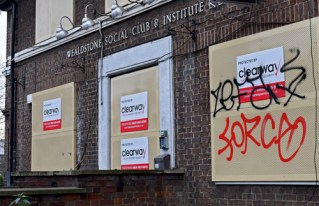
DSC_0424d2It can only be good that the purchase of the eye soar Wealdstone Social Club has been completed as planned.
Both the opposition and administration are important for the council to function effectively and serve residents best.
Cllr Macleod-Cullinane, hoped to be his group leader, needs to follow his present leader’s professional approach and calmness!


Blackman slapped by Shahs and not on May’s list of recognition

bb10Harrow East MP Bob Blackman apparently failed to convince Theresa May to offer him housing minister job despite his flattering praises for her policies.

One telling example is his blind retweets of the Number 10 government  propaganda that all is well in NHS while leading medical professionals are warning that Patients ‘dying in hospital corridors’
Mr Blackman might feel that because he owns six buy-to-let properties in Welwyn Garden City and because he moved the Homelessness Reduction Bill, he is over qualified for the housing job that comes with an opportunity to work closely with very rich property developers and housing associations.
“This man either knows nothing about the attack on our sector or he must be thinking about the Institutional Investor to house the Homeless – S24 will not help the homeless it will make it worse” is a knowledgeable response to Mr Blackman’s headline grabbing homelessness rhetoric.
Not only this but Theresa May might also be aware that Mr Blackman is not in step with the key government foreign policies specific to Asia and Middle East, and how his divisive politics has been rigorously challenged.
Following nationally known Harrow council resolution condemning Mr Blackman, for inviting an Indian extremist to an event at the UK Parliament, most probably facilitated by his equally divisive assistant, local community leaders have spoken out.
Councillor Sachin Shah had said, “One of the things makes me proud to be the leader of Harrow council is our good community cohesion. People of different faith live side by side with no problems. Bob Blackman should be ashamed that he brought someone to Parliament who wants to divide Harrow’s communities”.
The assembly member for Brent and Harrow Navin Shah said, “Mr Blackman’s feeble attempt to escape just criticism is pathetic.  He has blown his opportunity to explain how he managed to give a platform to the hate preacher Tapan Ghosh”.
“To make matters worse he has not even had the decency to apologise for bringing Parliament’s and Harrow’s reputation into disrepute. He has been allowed long enough to conduct his divisive and sectarian practices in Harrow. Mr Blackman is no friend of our diverse communities in Harrow” Navin Shah added.
“Never before Harrow had an MP who is so bitter and divisive and freely mixes with far right elements for votes. It is about time Harrow East Tories should respect Harrow cohesion and stop selecting divisive characters to attract voters from a few communities ” said Dr Pravin Shah, coordinator Harrow Monitoring Group.
Mr Blackman just survived at the last general election!


Harrow CAN-CAN wins 2nd place at New Year’s Day parade

Harrow’s entry at London’s New Year’s Day Parade hit an all-time high on Monday, with their Moulin Rouge-inspired float winning second place and a whopping £9000 for the Mayor’s charities.
The thousands of pounds will now be handed to the Mayor’s charities – Harrow Women Centre and Harrow Law Centre.
“Winning second place is a fantastic achievement but what’s even better is that the money will really help change lives. Well done everyone – Harrow has made me proud” said Harrow mayor Cllr Margaret Davine.
Those taking part in the parade included the talented Beverley School of Dance, the Kodak Football Club, and Cllrs John Hinkley and Jean Lammiman who have worked so hard in preparing and organising this year’s entry.


Interim Harrow council chief appointed

Tom Whiting2As we predicted weeks ago, Tom Whiting has been appointed as the interim chief executive (head of paid service) for the period from 6 January 2018 to 24 May 2018, after which the then elected administration could appoint the substantial chief executive.
The post has resulted since the Harrow Council chief executive Michael Lockwood has been appointed as the first director general of the new Independent Office for Police Conduct (IOPC).
Mr Whiting, Oxford educated and previous strategy consultant, has been with the Harrow council for more than 12 years.  He joined the Harrow council as divisional director strategy & improvement in 2005, progressed to assistant chief executive in 2008 and then to the corporate director of resources from 2013 to now.
Harrow’s population is growing and will continue to grow and the demographic of residents is changing. Households are getting smaller, life expectancy is anticipated to increase, and technological advances are changing the way people live and work.
Although Harrow enjoys relatively low levels of multiple deprivation, Harrow’s position compared to other local authorities has deteriorated over the years and two of the Borough’s wards contain areas in England’s 20% most deprived.
The government’s  harsh social welfare policies, austerity measures and housing supply and affordability have biting effects on Harrow.
Harrow has highly diverse population which rigorously requires to treat different groups of people equally well.
Therefore, improving the quality of life for all Harrow’s residents, whilst at the same time accommodating Harrow’s changing profile, is a key challenge for Mr Whiting.


Harrow’s ‘Night Riders’!

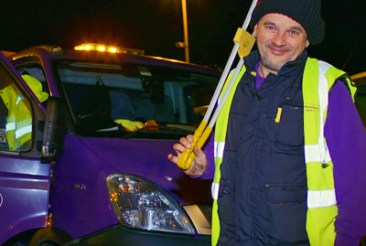
HNRThey work through the night and into the very early hours of the morning, five days a week, removing filthy fly-tips off the streets.  This can only be good!
The two man team works in the dark to clear illegally dumped waste reported to the council. Between 80 to 100 fly-tips reported to the council each day – they get anything from fridges, sofas and chairs to building material, and unwanted clothes dumped and strewn on the streets.
On average they get around 50 reports a night to clear, covering the entire borough. And they don’t stop there, – they keep their eyes peeled for any fly-tips not on the list no matter how big or small they are.
Random flytipping, recently a big problem in Harrow, is very difficult to eradicate. In the last year it costs the council £438,976 to clear up fly-tips.
Council says that the service hasn’t gone unnoticed by the residents who witness the night cleaning and appreciate accordingly.
“It’s great to see how much they appreciate this service – they come out of their homes or shout out their windows to say thanks to the crew in the middle of night. It’s not an easy job, but our night riders do it with dedication and our environmental services” said councillor Graham Henson, cabinet member for environmental services.

Not easy to shake-off Hall legacy

Legacy of arrogance and bins
Council works more smoothly where the opposition works as a critical friend, assisting the administration whenever possible and suggesting healthy alternatives whenever necessary, all in the interest of effectively serving the residents.
But what happened in Harrow under the previous opposition leader Cllr Hall, was a kind of ‘punch and judy’ attitude by her and her deputy at the Council meetings or the cabinet question times,  symbolised by wasting council time,  cheap personal attacks, Bin point scoring and so on.
Cllr Barry Macleod-Cullinane is still deputy leader of the opposition Tory group.
The group seems to have calmed down under Cllr Paul Osborn leadership. Meeting atmosphere has improved and undue pressure on officer time has eased – for example, Tory questions at a cabinet meeting have now been 10 compared with up to 72 previously  (such a high volume of questions in a 15 minutes slot at the meetings was absurd and served no purpose other than point scoring at the meetings).
However, while the culture of the Tory group is changing,  there are examples of arrogance and pettiness which need to be addressed:
As a norm, leader of the council is addressed as ‘leader’ by the councillors asking questions at the meetings chaired by the leader, and the leader calls the councillors by their first name, giving a sense of being colleagues.
In the cabinet meeting on 16 November 2017, the good atmosphere of the meeting was somewhat spoiled as the deputy leader of the Tory group arrogantly asked  not to shorten his name when  the council leader Cllr Sachin Shah called him by his first name for the question (13.20 on the timeline), and then Cllr Macleod-Cullinane  addressed the leader as Cllr Shah – later on (16.00) Cllr Macleod-Cullinane  called out, causing disruptions – typical Cllr Hall type unnecessary confrontation!
Similarly bins remain a subject at the councillor question time despite the fact that there are extensive officer reports regarding the bins and the bin collection arrangements!
Another example of unpleasantness at the meetings was lowering the level of debate by some Tory councillors and making irrelevant references at the last council meeting, in opposing the council motion that condemned Harrow East MP Bob Blackman for hosting an Indian extremist in an event at the Parliament. The motion was passed.

Homelessness Reduction Act to hit Labour-run councils hard, including Harrow

homelessMuch publicised Tory Homelessness Reduction Act, instigated by Harrow East MP Bob Blackman, comes nowhere near addressing the wider factors that are increasing homelessness, such as the lack of affordable housing for low income households and welfare reforms.
What the Act demands the councils to do is very difficult for them to deliver :  for example, virtually all (94%) London boroughs, report that helping homeless people to find a self-contained private rental is “very difficult” because of the combined effects of rising rents and welfare benefit restrictions, particularly frozen Local Housing Allowance rates. What the councils can’t deliver could be politically used against them at the council elections next year.
The Homelessness Reduction Act is creating false expectations and introducing massive extra bureaucracy into the work we already do to assist homeless households, while not creating any extra accommodation” said the Harrow head of housing needs Jon Dalton.
Similarly, building more homes won’t solve the housing crisis because the supply can’t meet much increased demand created by the government’s hard hitting socio-economic and welfare policies.
All this puts Labour-run councils, including Harrow, under far more pressure because of the deprivation factor and harsh welfare reforms, resulting in more challenging housing situations.
We are building the first new council homes in a generation and looking to purchase private properties to rent; neither of these options will meet the current demand for housing” says the Harrow council.
Access to housing remains a particular problem for homeless people because the welfare reform has been making both private landlords and housing associations more risk averse with regard to letting to households in receipt of benefits.
Homelessness pressures are mounting because of the increasing gap between actual rents and housing benefit (due to welfare reform)” points out Jon Dalton.
Harrow accepted 292 homeless cases so far this year compared with 388 last year. There are 329 homeless in temporary accommodation in borough and 47 outside borough – leading groups in the accommodations are white, followed by Asians and Black Africans.
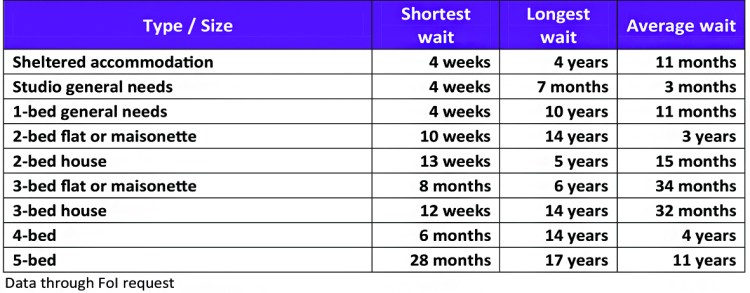
Total on waiting list for council accommodation at 07/12/17 is 1995 – average waiting time for being re-housed in permanent accommodation varies:
Basic CMYK