Harrow council planning regime is working on a policy document regarding the height of buildings in suburban areas – the areas which are not as densely populated as an inner city, yet more densely populated than a rural area in the countryside.
The tall building Supplementary Planning Document (SPD), in the draft formation and consultation stage, provides guidance on what contextually tall buildings mean in relation to existing building heights in suburban areas.
The SDP would help in deciding the planning applications by considering the ‘context’ and contextuality of the tall buildings applied for.
Councillor Marilyn Ashton, Cabinet Member for Planning and Regeneration, said the SDP would help protect the character of Harrow suburbs.
“People come to live in Harrow because of its Metroland, 1930s leafy areas, and they want to see that character retained” she said.
[“1930s leafy areas” characteristics of Harrow have changed over the time as are the communities expectations, living pattern and needs. The planning and regeneration policies should meaningfully reflect this change.
Between the last two censuses (held in 2011 and 2021), the population of Harrow increased by 9.3%, from just under 239,100 in 2011 to around 261,200 in 2021.
In 2021, Harrow was home to around 37.0 people per football pitch-sized piece of land, compared with 33.8 in 2011.
Harrow saw England’s joint largest percentage-point fall in the proportion of households that owned their home (from 65.3% in 2011 to 58.8% in 2021).
In 2021, 45.2% of people in Harrow identified their ethnic group within the “Asian, Asian British or Asian Welsh” category (compared with 42.6% in 2011), while 36.5% identified their ethnic group within the “White” category (compared with 42.2% in the previous decade]
Harrow’s built heritage is principally found in clusters around its medieval town centres and historic landscapes. Early settlements such as Pinner, Stanmore and Harrow on the Hill are already protected by Conservation Areas with many Statutory Listed Buildings.
The SDP defines a ‘contextually tall’ building as being equal to or greater than twice that of the prevailing height of an area.
The politics of using the ‘context’ and ‘contextuality’ of the tall buildings is likely to create a two tier system of the tall buildings in the borough in the less (mostly Conservative) or more (mostly Labour) deprived areas.
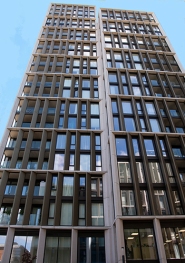 The less posh areas like the Greenhill and Marlborough wards that already have tall buildings could have more tall buildings, while the posh areas like Pinner, Hatch End and Stanmore would not.
The SDP by insisting on the context of the tall buildings according to the specific areas, primarily protecting the posh suburban parts of the borough and therefore implicitly preserving their socio-cultural, class and political make-up, mostly Conservative, is concerning as whatever is built on a problematic base, is going to be problematic!
Moreover, the lack of a unified approach to the tall buildings across the borough is at odds with the spirit of the equal opportunities and Harrow’s Core Strategy.
As a good practice, the planning and regeneration policies should enhance and not damage the socio-political cohesion, harmony and continuity across the borough.
The tall building Supplementary Planning Document (SPD), in the draft formation and consultation stage, provides guidance on what contextually tall buildings mean in relation to existing building heights in suburban areas.
The SDP would help in deciding the planning applications by considering the ‘context’ and contextuality of the tall buildings applied for.
Councillor Marilyn Ashton, Cabinet Member for Planning and Regeneration, said the SDP would help protect the character of Harrow suburbs.
“People come to live in Harrow because of its Metroland, 1930s leafy areas, and they want to see that character retained” she said.
[“1930s leafy areas” characteristics of Harrow have changed over the time as are the communities expectations, living pattern and needs. The planning and regeneration policies should meaningfully reflect this change.
Between the last two censuses (held in 2011 and 2021), the population of Harrow increased by 9.3%, from just under 239,100 in 2011 to around 261,200 in 2021.
In 2021, Harrow was home to around 37.0 people per football pitch-sized piece of land, compared with 33.8 in 2011.
Harrow saw England’s joint largest percentage-point fall in the proportion of households that owned their home (from 65.3% in 2011 to 58.8% in 2021).
In 2021, 45.2% of people in Harrow identified their ethnic group within the “Asian, Asian British or Asian Welsh” category (compared with 42.6% in 2011), while 36.5% identified their ethnic group within the “White” category (compared with 42.2% in the previous decade]
Harrow’s built heritage is principally found in clusters around its medieval town centres and historic landscapes. Early settlements such as Pinner, Stanmore and Harrow on the Hill are already protected by Conservation Areas with many Statutory Listed Buildings.
The SDP defines a ‘contextually tall’ building as being equal to or greater than twice that of the prevailing height of an area.
The politics of using the ‘context’ and ‘contextuality’ of the tall buildings is likely to create a two tier system of the tall buildings in the borough in the less (mostly Conservative) or more (mostly Labour) deprived areas.
The less posh areas like the Greenhill and Marlborough wards that already have tall buildings could have more tall buildings, while the posh areas like Pinner, Hatch End and Stanmore would not.The SDP by insisting on the context of the tall buildings according to the specific areas, primarily protecting the posh suburban parts of the borough and therefore implicitly preserving their socio-cultural, class and political make-up, mostly Conservative, is concerning as whatever is built on a problematic base, is going to be problematic!
Moreover, the lack of a unified approach to the tall buildings across the borough is at odds with the spirit of the equal opportunities and Harrow’s Core Strategy.
As a good practice, the planning and regeneration policies should enhance and not damage the socio-political cohesion, harmony and continuity across the borough.
 London’s mayor Sadiq Khan’s announced £130m scheme to give every primary school pupil in London free school meals for the next academic year, includes Harrow children.
 The collection of the food waste bins looked steady but is now less satisfactory under the new council administration (Tory), like as indicated by the resident comments on the Harrow council Facebook page that reported ‘since launching food waste recycling in flats last summer, we have now delivered kitchen caddies to 4,000 flats in Harrow’!

 The Kodak Works, a photographic manufacturing plant and research and development centre, was built in what was then farmland in the hamlet of Wealdstone, Harrow.


 Michael Lockwood, 63, director general of the Independent Office for Police Conduct (IOPC), has stepped down with immediate effect.
 Local councillors and residents have strongly objected to the planning application for the installation of a 5G mast in proximity of residents, an old people’s home and a primary school at the junction of Wynchgate & Wilsmere Drive, Harrow Weald.
 Harrow Monitoring Group
You must be logged in to post a comment.