About time!

Following our call ‘Time for Cllr Hall to step down’, we have heard that Cllr Hall is stepping down as the leader of the opposition Tory group at the Harrow council.
The Tory group members have rightly wished to use their voice and aimed for the change of direction to unite the group and demonstrate strength to voters (Tory group lost the councils in 2010 and 2014 as well as two by-elections in between, under Cllr Hall’s leadership) …  read more by clicking here
Out of the four candidates for the Tory group leadership election we have heard, we mention two:
MA4Cllr Marilyn Ashton, past chairman and an officer of the Harrow East Conservatives Association, is a long standing Harrow councillor representing Stanmore ward. She knows how council works and has particular interest in planning matters. Cllr Ashton is calm, analytical and well respected widely.

Paul Osborn has been a Pinner councillor for many years. He, because of AAEAAQAAAAAAAAWJAAAAJGJiNDEyNmRjLTQ3MzQtNGUxYy05MDA5LWM3NDJhM2JhNWNkNQhis ability in performance management, has been working with most senior officers at the council. He has been generally known as the non-confrontational face of the Tory group.
We hope whoever wins the leadership election would appreciate that in a local democracy both the administration and opposition have a crucial role in running the council for the benefit of the residents.
We also hope the new leader would work with all and demonstrate a non-vindictive approach.

Use of Harrow migration money questioned

Following is the summary of the feedback on our article Harrow obtained £400k on confused premises, and our further research.
Money is money, however it is obtained.
There have not been community consultations with the ‘migrant’ community or the ‘established resident population’ to ascertain needs and determine appropriate projects using £400K Migration Fund that are to benefit the established resident population.
The funding criteria say: “all projects must demonstrate how they will benefit the established resident community in the first instance”.
The Harrow case for £398,160 fund, argued to benefit the ‘established community’ by teaching English language to unclearly and uncertainly defined small group of people, including children, is somewhat ‘misleading’.
It is not the English language deficiency in a small number of people, mostly children, (mix of “migrants”, “asylum seekers”, “Unaccompanied Asylum Seeking Children”) that has implications for the quality of life of the ‘established resident population’, but the negative impact on the quality of life is mainly due to the increased anti-social behaviour that includes random flytipping, stabbings and trafficking which the council has failed to address effectively.
Given thatmigrationis people movement mainly to improve their lives by finding work, how could children, some “minor”,  meet the Migration Fund criteria?
In any case, needs of bilingual learners in English schools are already funded – the minimum funding levels for English as an additional language 2015-16 was: Primary £466 Secondary £1,130.
Also, where a school’s pupil numbers increase, for example due to a new migrant community, the school receives the associated funding for those pupils.
The Department for Education also allocates capital funding to local authorities to provide additional capacity, based on local authorities’ own data on existing school capacity and pupil forecasts. These forecasts take account of patterns of national and international migration.
Our disappointment is that the negative language describing ‘recent arrivals’ in 1980s and controversial  premise of acquiring  Section 11* money for them in Harrow then  (mostly for teaching English language) which did not really benefit them, have been duplicated for obtaining similar funds in 2017, giving a sense of professional incorrectness.
We feel sorry for the decision-making members of the council who were tempted by £400k but not really given an honest brief.

*Section 11 funding
A problematic view of immigrants was legalised by the Local Government Act of 1966, stating a negative definition “immigration is the great social problem of this Century and of the next” – p1308 of Hansard: 1966/67: Volume 29.
In response, Section 11 of the Local Government Act of 1966 provided funding to the authorities to ‘help meet the special needs of a significant number of people of commonwealth origin with language or customs which differ from the rest of the community’. This funding was vastly obtained to integrate and teach English language to bilingual learners but was mostly used for all sorts of things and was eventually discredited.  Read more

Harrow obtained £400k on confused premise!

Following our article regarding the £400k Controlling Migration Fund (CMF) to Harrow, we have obtained a copy of the application for the funding.
Like the Section 11 funding* and its use/ misuse many years ago, Harrow application for £398,160 public money revolves around teaching English language to unclearly and uncertainly defined group of people.
Harrow funding is important but what is also important is the premise for obtaining the additional public money, considering the biting cuts in public services around the country and more deserving cases somewhere else. Further concern is the expression of negativity about certain groups of people in a zeal to meet the funding criteria.
Many migrants have no understanding of our cultural norms. This has led to numerous problems particularly in relation to the nature of their interaction and treatment of girls and young women” asserts the application.
The CMF was launched last November and allows local authorities in England to bid for funding for “responding to the problems caused by high migration” where the projects “will deliver benefits to the established resident population”.
Somewhat confused Harrow application sets the scene: “Harrow has an extremely diverse population. The population is 25% Hindu, 12% Muslim and 37% Christian (are these well established groups  ‘migrants’?). This level of diversity has not helped migrants assimilate (there is obvious difference between ‘integration’ and  colonial expectation of  ‘assimilation’!!). Approximately half the client group of the Leaving Care and UASC (Unaccompanied Asylum Seeking Children) Team are, or were unaccompanied minors. In the last year the Team has received twenty-two new young asylum seekers. This does not include those who are Dublin Regulation referrals”.
Then the application points out, “The migrants referred to our service arrive with limited or no written or spoken English. In the past twelve months, including the Dublin Regulations and Dubb’s amendment children we have had 35 new children, none of whom spoke English”.
But the standard definition ofmigrantsis those who choose to move not because of a direct threat of persecution or death, but mainly to improve their lives by finding work?
Are these migrant ‘children’, some ‘minor’,  here to find work  ?
The Dublin Regulations are to reduce the number of “orbiting” asylum seekers, who are shuttled from member state to member state (EU).
An asylum seeker is someone who claims to be a refugee but whose claim hasn’t been evaluated.
Refugees are those fleeing armed conflicts or persecution.
So who are these children – migrants, asylum seekers or refugees?
The application has seeming made exaggerated case of the impact of the English language deficiency in a small number of ‘children’ on the lives of the rest of the Harrow population.
Moreover, a well run council should have credible professional risk assessment and could/should absorb pressures due to the demographic changes rather than draining out scarce national resources.
Perhaps the decision-making members of the council were tempted by £400k but not given an honest and clear picture.

*Section 11 funding
A problematic view of immigrants was legalised by the Local Government Act of 1966, stating a negative definition “immigration is the great social problem of this Century and of the next” – p1308 of Hansard: 1966/67: Volume 29.
In response, Section 11 of the Local Government Act of 1966 provided funding to the authorities to ‘help meet the special needs of a significant number of people of commonwealth origin with language or customs which differ from the rest of the community’. This funding was vastly obtained to integrate and teach English language to bilingual learners but was mostly used for all sort of things and was eventually discredited.

Tory ‘hypocrisy’ on sexual matters!

While the council is in summer recess, Edgware councillor Chika Amadi  (Lab) is facing calls to resign over her social media comments regarding lesbian, gay, bisexual, and transgender (LGBT).CA
Having seen some intriguing comments by Tories apparently supporting what Pink News has reported and is demanding, Tories seem to be mindful of their success at  Kenton East and would now welcome Edgware by-election.
In July, thousands of people joined the annual LGBT+ parade through the capital and Cllr Amadi reportedly said that Pride parade marchers are ‘traumatising’ little girls with nudity.
She allegedly wrote: “Nothing but paedophilia being labelled liberalism adults polluting children with their senselessness.”
In responding to the criticism about her comments, Cllr Amadi reportedly said, “Anyone who wants to bring me down from my political career because of my faith and stand on the word of God will encounter the burning anger of the God that I serve”.
Hopefully Labour would deal with Cllr Amadi accordingly but Tories have never taken any action against their Harrow East MP Bob Blackman for his controversial position on LGBT.
For example, in disapproving the same-sex relationships, Mr Blackman was widely reported saying, “I was one of those that strongly believed that Section 28 was the right rules to have in school so that we should not promote in any way shape or form promote same-sex relationships, I still abide by that and feel that is the right way forward, and if teachers are forced to say same-sex relationships are equivalent to heterosexual relationships I’d be very opposed to that.”
Section 28, introduced by Tory government and repealed by Labour, made it unlawful for local authorities to ‘promote homosexuality’.
Mr Blackman also voted against allowing marriage between two people of same sex.

Specific funding for Harrow – history repeats!

Harrow council has announced that nearly £400k has been awarded to Harrow from a government scheme designed to help migrants integrate in their new communities in the UK.
The Controlling Migration Fund (CMF) was launched last November and allows local authorities in England to bid for funding totalling £100million over four years from 2016/17 to 2019/20.
Communities Secretary Sajid Javid said: “Migration brings great benefits to this country but, in some places, significant population changes in a short space of time have put pressures on public services. This new funding will help councils rise to the challenge.”
The target group is seemingly Eastern European migrants (refugees are not classed as ‘migrants’)!
Harrow council is hopeful that this funding “will help families integrate and increase their ability to contribute economically (how?)”, for example, by employing a teacher to provide English lessons (one teacher for the whole migrant population in Harrow?).
The use of this funding has to be more imaginative.
Where councils recognise that the established resident community within their area has been in some way affected by recent migration, either legitimate or illegal, they are invited to put forward a bid to the fund. The proposal should set out the issue, with evidence, and the action that the council wishes to take. Examples of eligible activities include building community cohesion and encouraging integration, tackling the increase in rough sleeping by non-UK nationals or tackling rogue landlords.
Commenting on the marginal funding, Harrow Council for Justice chairman Jaiya Shah who had first-hand experience of the use and misuse of the Section 11 funding in Harrow in 1980s, said “seen this before – the premise and use of the funding reminds what happened 35 years back”.
Then Harrow received substantial amount of Section 11 money which was more or less used to balance the books or to provide mainstream services like education and housing without consulting the beneficiaries of the Section 11 funding or ascertaining  their specific needs.
To avoid past bitterness, perhaps the Harrow council could learn from its 1980s archives regarding section 11 community consultations.
Also, perhaps the council would like to use some of this specific money to address much increased ad hoc flytipping in the borough.

Section 11 funding
A problematic view of immigrants was legalised by the Local Government Act of 1966, stating a negative definition “immigration is the great social problem of this Century and of the next” – p1308 of Hansard: 1966/67: Volume 29.
In response, Section 11 of the Local Government Act of 1966 provided funding to the authorities to ‘help meet the special needs of a significant number of people of commonwealth origin with language or customs which differ from the rest of the community’. This included funding to support the education of bilingual learners.

New waste disposal plans

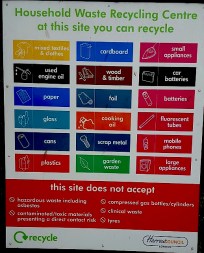
Recycling-glassHarrow council is likely to introduce new arrangements for using the Harrow dump yard at the Forward Drive (formally known as Harrow Re-use and Recycling Centre).
The HRRC review report before the cabinet meeting on 13 July, recommends measures to seemingly raise money and reduce the number of vehicles visiting the site – 35,000 cars a month on the upper level and several hundred vans on the lower level, last year.
The report recommendations include that all Harrow residents produce proof of identification to demonstrate that they live in the borough in order to dispose of household waste free of charge.
The ID to be presented on entry could be a Council Tax Bill, a Bank Statement, an Electric, Gas or Water Bill or a Driving licence – no estimation of the inconvenience and delays that the identification procedures would cause.
The council is required to provide a place for residents in its area to deposit their household waste free of charge, although not obliged to accept other types of waste free of charge.
Along with the identification, Automatic Number Plate Recognition systems (ANPR) at the site will be used to help control and restrict unauthorised usage.
The other biting recommendation is that Harrow residents be prevented from disposing of non-household waste free of charge, including building waste resulting from construction or demolition works and home renovation works. This has serious implications for the residents who carry out DIY activities.
Where the disposal of waste resulting from household renovation projects could be permitted free of charge, it is restricted to a maximum of two bags of rubble or spoil per day – if more than this, the whole load be deemed non-household waste and becomes chargeable.
Repeat visits by residents disposing of small amounts of waste building materials will also result in a decision that the waste is non-household and therefore charges will be levied.
One wonders about the cost effectiveness of implementing these waste disposal measures, and the level of public inconvenience the new arrangements would cause.

Harrow shares national concerns

We hear concerns that when suited the government praise public sector workers but do not really value them to give them a wage rise, resulting in some turning at food banks.
Workers have had enough of this and so have the British public. Public sector pay cap must end.
Harrow can’t be detached from the national mood highlighted at 100,000 strong London march and rally on 1 July (click the play button to watch the video).

Tories are in retreat, and this is likely to include ending the public sector pay cap as Theresa May is under pressure by her senior cabinet ministers, including the previous Tory party leadership hopefuls Gove and Johnson.
This raises another serious concern: the Tory manifesto cost included cap, how the cost of ending the cap would be absorbed, given that DUP is badly shaking the ‘money tree’ – for example, enjoying £1b hand out and reportedly Tories paid £20,000 to fly DUP leader Arlene Foster back to Belfast in an RAF plane after Downing Street talks – despite commercial flights being available for as little as £41.

Harrow East MP hits out at schools for their funding concerns

At the Commons on 27 June, Tory MP for Harrow East Bob Blackman asked the secretary for education, “Will she condemn the propaganda that is still going out from schools and the unions, claiming that there will be vast reductions in expenditure on a per pupil basis”?bb10
The national funding formula (NFF)  proposed by the 2015 Government would be used to calculate and distribute core revenue funding for mainstream schools in England – at present, funding levels are determined through a combination of national and local funding decisions.
The NFF will mean further cuts for some schools on top of what National Audit Office warned that schools in England were facing an 8% real-terms cut in funding per pupil by 2019-20 as a result that mainstream schools, overall, would need to find £3 billion of efficiency savings by 2019-20.
The DfE said that the main group of schools likely to see reductions were those in Inner London and some other urban areas that have particularly benefitted from historic funding decisions and where underlying levels of deprivation have fallen over recent years (Harrow’s deprivation has not been seriously taken by the funding authorities).
In view of the Tories ever changing manifesto commitments, the teaching profession has no real confidence in the latest Tory promise to amend their funding formula plans. Moreover, finding more money for education now seems very unlikely because of the government’s £1 billion deal with Democratic Unionist Party to prop up Theresa May’s minority Government.
What Mr Blackman, who narrowly escaped defeat at the last general election, says “propaganda” by the schools is really a big public concern that by 2022 93% of schools will have per-pupil funding cut – £338 average loss per primary pupil and £436 average loss per secondary pupil.
Under the plans as they are, Harrow schools will face cuts (-£) due to NFF which could equate to, on average, the loss of at least two teachers in primary and six teachers in secondary schools.

Tory politics divisive – playing on sectarian issues

NS2London assembly member Navin Shah has thanked Harrow East residents for supporting him at the last general election – he was Labour candidate for the seat.
Mr Shah achieved +5.3 swing, slashing Bob Blackman’s (Con) majority from 4,757 in 2015 to 1,757 (Blackman 25,129  Shah 23,372 – turnout 71.07%).
I’m proud of positive and clean campaign we ran in Harrow East. It was a campaign fuelled by and fought with nothing other than love, friendship, family and the kindness and determination of some of our local activists, volunteers and party members who had the strength and imagination to believe that the supposed ‘impossible’ was actually completely possible” said Mr Shah.
Mr Shah had only few weeks to campaign in the general election, called by Theresa May in panic, where the bulk of Labour resources were invested in the other constituency, Harrow West.
Mr Shah has pointed out that in the last few years Tories locally have seen it fit to run negative campaign risking division than forging unity.
As an example, Mr Shah mentioned a resident’s letter to him that said:  “I’m really upset when letters by the Tory Party, recently one signed by Dolar Popat are being circulated. This sort of politics is divisive and playing on sectarian issues. The Labour Party needs to say something. Politics is secular. I’m an East African Asian of Jain background. I do not want to be lumped with any religion.”
Commenting on the divisive campaign, Mr Shah added, “The general election also saw the same old issues like Kashmiri Pundits and caste legislation dragged out for the Tory propaganda to find cheap favours amongst Indian / Hindu voters”.
Also read Blackman not supported!

Disrespect for Grenfell Tower fire victims

Update: We glean community concerns about systematically watering down the Grenfell Tower fire disaster, the Finsbury Park mosque terror attack and sharp rise in far right extremist elements. Social media, now a much stronger voice, is full of far right venom which has wider and significant impact.  What Harrow and others need is honest information and reassurance – no down-playing!


It can only be good that Harrow played its part in supporting the victims of the Grenfell Tower fire.
It was very graceful of the Queen and Prince William to visit a relief centre for Grenfell Tower fire victims last Friday (16.6.2017). They met volunteers, residents, community representatives and comforted victims. All this has been widely appreciated.
Equally appreciated is the tremendous community help and support for the victims of the Grenfell Tower fire disaster – the police confirmed that at least 79 people have died (many say that the number has been played down).
Jeremy Corbyn promptly visited the scene of the fire, warmly shared the community grief, extensively interacted with people and reassured his care and support.
In contrast with all this, government response has been very patchy, lacking warmth and reassurance, resulting in public pain and anger being directed at them.
It took several hours nagging on twitter and directly questioning her silence on the day of the Grenfell Tower disaster, including by the Harrow Monitoring Group, that Theresa May acknowledged the tragedy in few shallow words.promo321801981
Similarly under strong criticism for her somewhat ‘cold-fish’ attitude to the tragedy, Theresa May eventually visited the scene last Thursday (15.6.2017), one day after the tragedy, talked to firemen but failed to meet the community workers or survivors of the tragedy.
Again there were hundreds of tweets condemning Theresa May’s half-hearted and superficial response.
Queen’s visit on Friday and her warmth towards people concerned, provided a lesson to Theresa May and she hurriedly visited some injured in the fire, later on the Friday.
However, still no public appearances by her strategically appointed housing minister Alok Sharma or the community secretary Sajid Javid to share public sorrow or concerns regarding the health and safety aspects of the tower.
Grenfell Tower in the heart of a richest borough provides council housing mostly to poor, deprived and vulnerable, and has previously known health and safety concerns. Provisions for the fire survivors give a sense of refugee camps in this rich borough!
The bitter question in many minds is why the young, old and vulnerable inhabitants of this tower block are treated so disrespectfully and insensitively by the local council and the central government.
For example, no government directive to show formal respect to the innocent victims of the Grenfell Tower fire by observing one minute silence – do all lives matter?